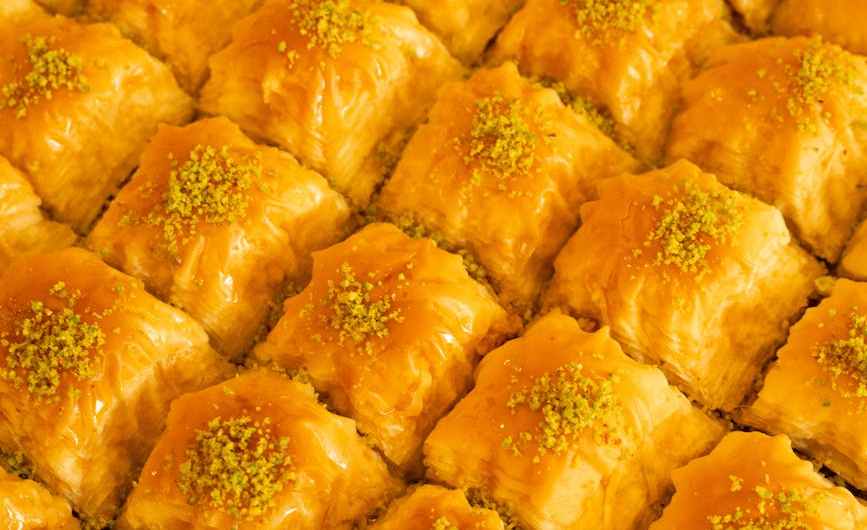
Baklava
At a dessert-themed potluck, my friend Sarah decided to showcase her homemade baklava, eager to impress our sweet-toothed group. As she proudly presented her golden tray of baklava, our friend Tim, notorious for his sweet tooth, couldn’t contain his excitement.
“Wow, Sarah, this baklava looks so good, I think I just got a cavity from looking at it!” Tim exclaimed, causing everyone to burst into laughter.
Unfazed, Sarah replied, “Well, Tim, if you get a cavity, you can blame it on the honey in the baklava, not my baking skills!”
As we all indulged in Sarah’s delicious creation, Tim couldn’t resist going back for seconds and thirds, jokingly blaming each additional piece for his imaginary cavities. From then on, every time baklava was mentioned, we couldn’t help but recall Tim’s comedic sweet tooth antics.
Ingredients
For the Filling:
- 1 pound (about 4 cups) mixed nuts (such as walnuts, pistachios, and almonds), finely chopped
- 1/4 cup granulated sugar
- 1 tablespoon ground cinnamon
- 1/4 teaspoon ground cloves
For the Syrup:
- 1 cup granulated sugar
- 1/2 cup water
- 1/2 cup honey
- 1 cinnamon stick
- 1 strip of lemon zest
Additional Ingredients:
- 1 package phyllo dough (about 16 ounces), thawed if frozen
- 1 cup (2 sticks) unsalted butter, melted
Instructions
Step 1: Prepare the Nut Filling
In a bowl, combine the finely chopped mixed nuts, granulated sugar, ground cinnamon, and ground cloves. Mix well and set aside.
Step 2: Prepare the Syrup
In a saucepan, combine the granulated sugar, water, honey, cinnamon stick, and lemon zest. Bring to a boil over medium-high heat, stirring until the sugar is dissolved.
Reduce the heat to low and simmer for about 10 minutes, until the syrup slightly thickens. Remove from heat and let it cool completely. Once cooled, discard the cinnamon stick and lemon zest.
Step 3: Prepare the Baklava
Preheat the oven to 350°F (175°C). Lightly grease a 9×13-inch baking dish.
Unroll the phyllo dough sheets and cover them with a damp towel to prevent them from drying out.
Place one sheet of phyllo dough in the prepared baking dish and brush it generously with melted butter. Repeat this process, layering 7-8 sheets of phyllo dough and brushing each layer with butter.
Sprinkle about 1/3 of the nut mixture evenly over the phyllo dough layer.
Continue layering phyllo dough sheets, brushing each with butter, and sprinkling with the nut mixture until all the nuts are used, reserving a small amount for the top layer.
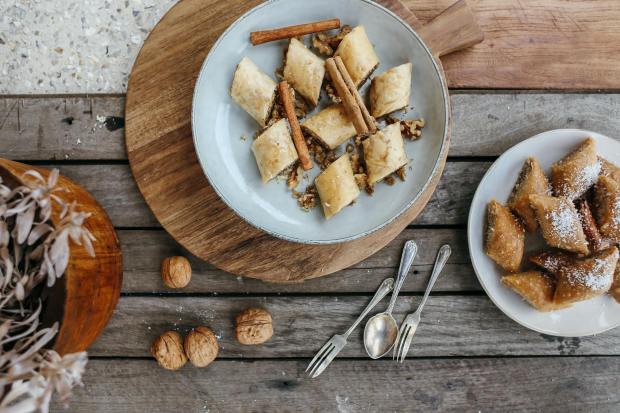
Finish with a final layer of phyllo dough sheets, brushing the top generously with butter. Use a sharp knife to cut the baklava into small diamond or square shapes.
Did you know? Baklava is not only delicious but also steeped in history. Originating in the kitchens of the Ottoman Empire, baklava was considered a luxurious dessert enjoyed by royalty and the wealthy elite. Its intricate layers of phyllo pastry and nuts, soaked in sweet syrup, were not just a treat for the taste buds but also a symbol of wealth and status. Today, baklava continues to delight palates around the world, carrying with it centuries of culinary heritage and tradition.
Step 4: Bake the Baklava
Place the baking dish in the preheated oven and bake for 45-50 minutes, or until the baklava is golden brown and crispy.
Remove the baklava from the oven and immediately pour the cooled syrup evenly over the hot baklava. Allow it to cool completely in the baking dish before serving.
Step 5: Serve
Once cooled, carefully remove the baklava pieces from the baking dish and transfer them to a serving platter.
Serve the baklava at room temperature, garnished with additional chopped nuts if desired.
 Middle Eastern Recipes